SAT 28 NOV
11:35
12:20
Monterosa
Deterministic MCP Server
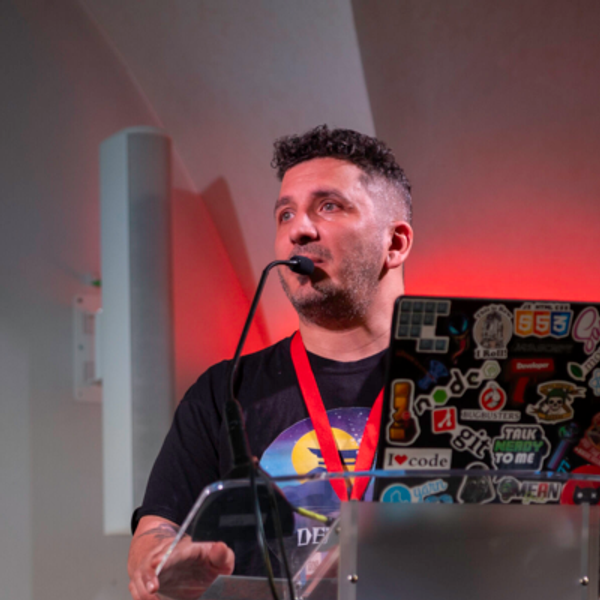
Emiliano Pisu - Senior Frontend Engineer ✨ AI Product Engineer 🎨 Design Engineer ♿️ Accessibility WCAG Advocate 🎤 Speaker 👨🏻🏫 Mentor
What happens when a local MCP server is designed to enforce engineering standards rather than simply exposing tools? After six months of experiments, I developed and rigorously tested `pix-galaxy-mcp`, an Agent-Skills-focused MCP server featuring 235 tools, 146 prompts and resources, 70 indexed skills, and a deterministic control engine covering frontend, backend, accessibility, design systems, testing, architectural decision records, and cross-session handoffs. It was used in four real-world projects—implemented using the same prompt but across three different models—resulting in 12 measurement sessions comparing Claude Sonnet, GPT, and DeepSeek. The results challenge several common assumptions: the MCP server accounted for ~5% of the total project effort, and prompt caching significantly altered costs. This presentation offers a deep, honest technical analysis backed by billed token usage, generated code, MCP compliance scores, architectural outcomes, and failed experiments. It includes a practical demonstration of safeguards, such as automatic fail-safe shutdowns and deterministic validation. The MCP server does not replace model quality, but it can transform vague coding conventions into measurable engineering safeguards.